

Are you an educator in Shakespeare history? We have educator resources that coordinate with our show available inside our member’s area. Take That Shakespeare Life into your classroom with lesson plans, history guides, and hands on activity kits that coordinate with our show and with Shakespeare’s plays. Explore membership.
Famously in Shakespeare’s play, Macbeth, the title character becomes convinced he cannot be killed because the witches tell him he cannot be killed a man “of a woman born.” It is only when it is too late that Macbeth learns his nemesis, Macduff, was “from his mother’s womb untimely ripped”, in reference to a cesarean surgery, that Macbeth learns of his ultimate fate. Shakespeare’s inclusion of cesarean section in his play comes at a time when medical science and religious doctrine were questioning the viability of this procedure in a heated public debate. In 1581, French surgeon Francois Roussett published “The Hysterotomotokie or Caesarian Birth” which argued women should have cesarean as a viable option for birth during difficult deliveries. His publication caused quite a stir in medical society, with surgeons across Europe speaking out publicly to condemn the very suggestion. The heated conversation traveled all the way to England where a man contemporary to William Shakespeare, named Simon Forman, would write about cesarean sections in his publication “Matrix and the Pain Thereof.” True to form, it seems William Shakespeare’s play, Macbeth, was full of poignant and extremely timely cultural references to a huge political debate that was happening right when the play was written. Here today to help us understand the history of cesarean sections during Shakespeare’s lifetime and exactly how controversial it might have been to include cesarean sections in his play, is our guest, professor of the history of medicine and author of “Women, Health, and Healing in Early Modern Europe”, Mary Fissel.
Please subscribe on your favorite listening platform and leave us a rating & review to help others discover our show.
Subscribe
Itunes | Stitcher | TuneIn | GooglePlay

Mary E. Fissell is professor of the History of Medicine at Johns Hopkins University. Her work focuses on how ordinary people in early modern England understood health, healing, and the natural world. Her introduction for the Bulletin of the History of Medicine explores Women, Health, and Healing in Early Modern Europe. Her publication, Vernacular Bodies, explored how everyday ideas about making babies mediated large scale social changes. Connect with Dr. Fissell and explore her research here.
I’ll be asking Mary Fissell about:
- Was “cesarean section” an established medical term for the 16th century?
- Were c-sections performed regularly during Shakespeare’s lifetime?
- If someone had a cesarean where the baby was removed from the body of the mother, was that still considered “giving birth”?
- …and more!
Resources You Can Use to Learn More:
Vernacular Bodies by Mary Fissell
Eucharius Roeslin, The byrth of mankynde, newly translated out of Laten into Englysshe… (London: By T[homas] R[aynald]] Cum priuilegio regali, ad imprimendum solum, 1540.) STC (2nd. ed.) / 21153. Read here Also available at the National Library of Australia. You should be able to get a copy through interlibrary loan if the online version is not accessible.
“yf it chāse that the woman in her labor dye / & the chyld hauyng lyfe in it / thē shall it be mete to kepe open the womās mouth / and also the nether places / so that the chylde maye by that meanes bothe receaue & also expell ayre & brethe which otherwyse myght be stopped / and thē to turne her on the left syde / & there to cutte her open / & so to take out the chylde / & they that are borne after this fashion be called cesares / for because they be cut out of theyr mothers belly / whervpon also the noble Romane cesar the .j. of that name ī Rome toke his name.” p. liii.
Janet Adleman, Suffocating Mothers

Here’s what’s inside this week:
- 15th century woodcut of a baby being removed from a woman’s body
- 16th century woodcut of a c-section surgery
- 15th century illustration of a c-section
- Medieval illustration from a text of a doctor performing a c-section on a woman on a table

Featured Products from our Shop
-
 Baynard’s Castle – Historic London Castle Illustration$21.00
-
 Pontefract Castle$21.00
-
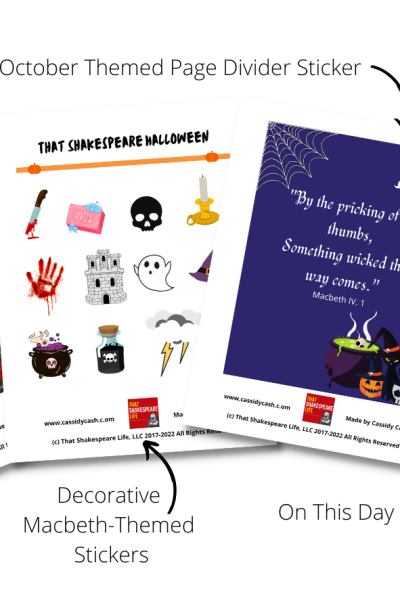 October Macbeth Themed On This Day Printable Sticker Pack$8.00
-
 Stratford Upon Avon Greeting Card$5.00
-
 Walk To London Diagram$14.00
-
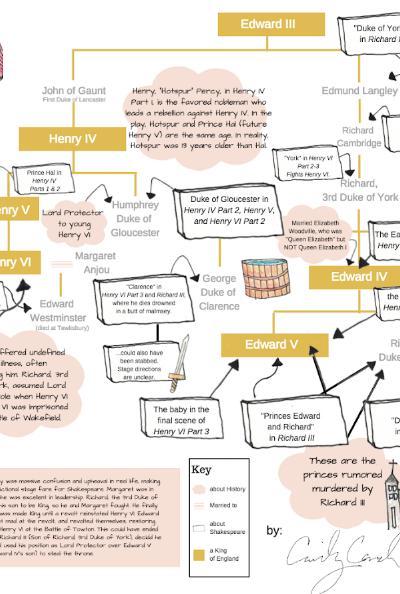 Characters & Context Shakespeare’s History Map$10.00
-
 Holy Trinity Church Hand Illustrated Digital Print$7.00
-
 Theaters of 1600 London$7.00
-
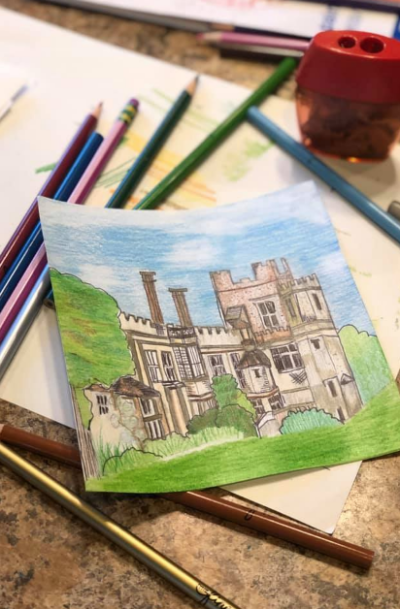 Sudeley Castle Print | Watercolor$4.00
Comment and Share
If you enjoyed our episode this week, share it with someone who would love to learn something new about the bard! You can send them the link to this page, or share the episode on social media. We’re most active on X and Instagram, but we are also on Facebook and Pinterest. Come find us, we love to chat about Shakespeare history!
If you listen to our show on a podcast listening platform, please leave us a rating and review. Your ratings and reviews help other listeners find our show and help improve our rankings on these platforms.
Have a question for a guest? You can leave a comment on this page and guests are notified of your questions. Often they will reply back right here on the page.
