

with Samantha Bilton
From delectable marchpane in Romeo and Juliet, and the herbs of the Merchant of Venice to stew’d prunes of Henry IV, and carving capons in Love’s Labour’s Lost, there is a wide gambit of meals consumed in Shakespeare’s plays that span from bawdy feasts to elite noble banquets, and even popular meals eaten as much to control your behavior as they were seen as nourishment. The details about food found throughout Shakespeare’s plays reflect the real foods enjoyed from the peasants to the royalty of Shakespeare’s life.
This week we are diving into these delectable delights with food historian and author Sam Bilton, to talk about her latest book, Much Ado About Cooking—which was created in collaboration with Shakespeare’s Globe—that allows us to get a literal taste of Shakespeare. Much Ado About Cooking takes Shakespeare’s own food references and pairs them with real recipes from his lifetime, then reimagines those recipes for the modern cook so that you can easily make, and eat, food from the life of William Shakespeare.
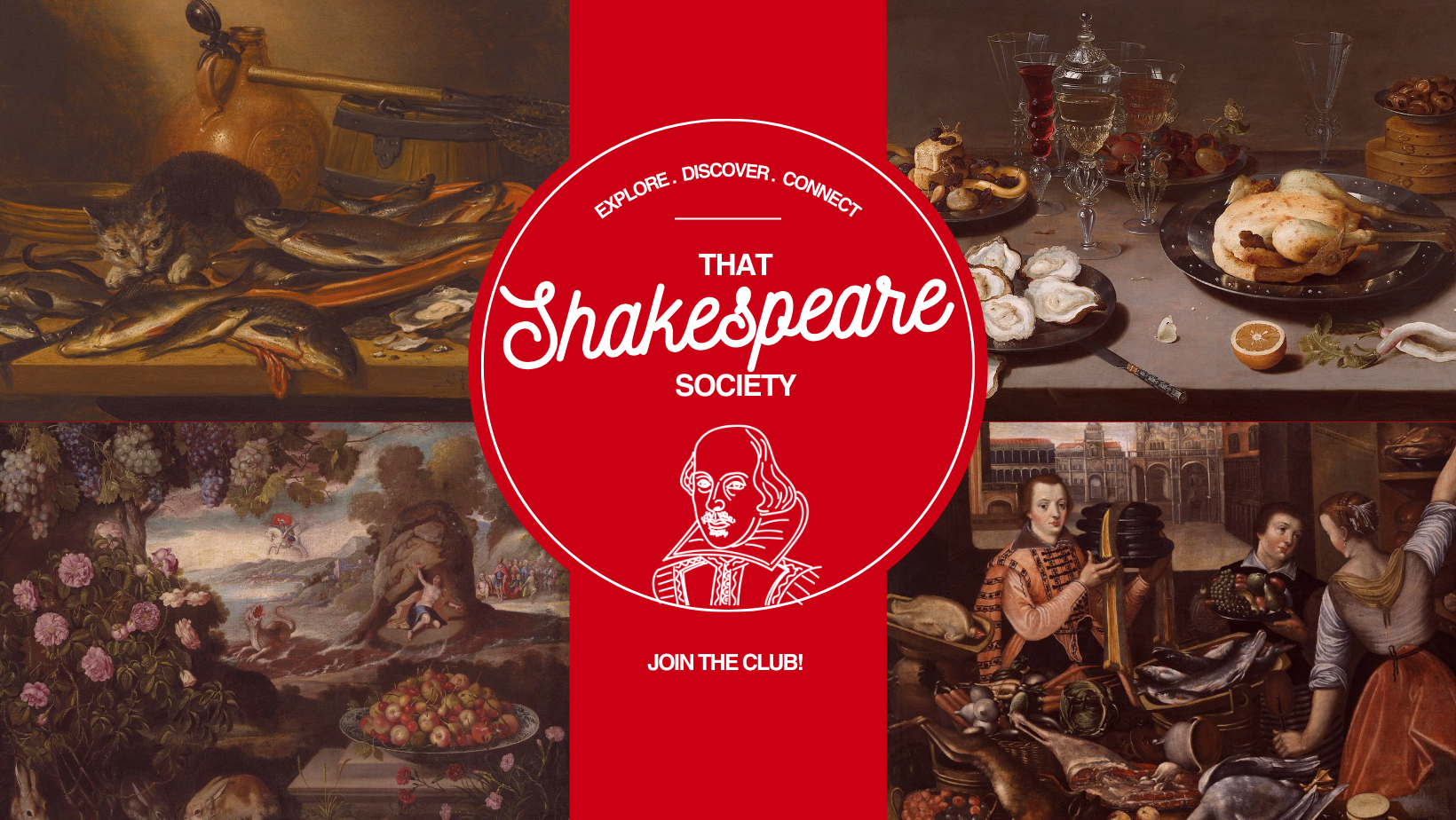
Want to see the insider details while you listen?
If this episode sparked your curiosity, there’s more inside That Shakespeare Society. Explore the behind-the-scenes research for this episode, including original documents, portraits, and artifacts that let you see the history while you listen.
This episode’s insider extras include:
- Funeral feasting traditions and the practice of bread doles, illustrated with surviving early modern bread tokens
- Period accounts and primary texts describing charitable food distributions tied to death and remembrance
- Tavern scenes from sixteenth- and seventeenth-century art that illuminate Shakespeare’s drinking and dining culture
- Visual explanations of humoral theory and how food was believed to shape temperament and health
- Still-life paintings and household images showing the everyday foods of Shakespeare’s lifetime
- Links to digitized early modern cookbooks and household manuals used by food historians
- …and additional images, documents, and sources for deeper exploration.
These materials are available exclusively to members of That Shakespeare Society.
→ Become a member and explore the sources behind the story.

About Samantha Bilton
Food historian, writer and cook Sam Bilton has been intrigued by spices most of her life. Her first book on the history of gingerbread won a World Gourmand Cookbook award in 2021 and she is a frequent contributor to national magazines, food festivals, television and radio. For further information visit sambilton.com or follow Sam on instagram @mrssbilton
Books by Samantha Bilton
Much Ado About Cooking
Fool’s Gold: A History of British Saffron
What We Talk About
In this conversation, Sam Bilton explores how food functioned in Shakespeare’s world both as a daily necessity and as a powerful cultural symbol. Using examples from Hamlet, Twelfth Night, and the Henry IV plays, she explains the social meaning behind funeral feasts, tavern food, and the frequent appearance of meat, bread, cakes, and ale in Shakespeare’s language. Funeral meals reflected social status, ranging from elaborate pies and joints of meat for the elite to charitable distributions of bread for the poor, while tavern fare centered more on drink than food—and when food is mentioned, it is often metaphorical rather than literal. Sam also unpacks how Renaissance ideas about health and temperament shaped eating habits, such as Petruchio’s deliberate denial of “hot” foods to Katherine in The Taming of the Shrew, revealing how food was believed to influence mood and behavior.
The discussion also delves into how meals were structured in Shakespeare’s lifetime, with the main meal eaten midday, dishes served in simultaneous courses, and strict table etiquette governing who ate what. Sam explains period concepts like “white meats” (dairy products) and why butter became especially expensive in the late sixteenth century, before turning to how she adapted early modern recipes for modern kitchens. She describes balancing historical accuracy with accessibility—keeping period ingredients where possible while modernizing what’s impractical—alongside recommending key primary and secondary sources for listeners who want to explore early modern food history further. The episode closes with reflections on the enduring richness of Renaissance household manuals and why The English Housewife would be Sam’s book of choice on a deserted island.
Where to Learn More
- The Good Housewife’s Jewel — Thomas Dawson
- The Good Huswifes Handmaide for the Kitchin — Thomas Dawson
- The English Housewife — Gervase Markham
Also available on Archive.org - A Treasurie of Commodious Conceits — John Partridge (Archive.org link)
- A Booke of Cookrye — John Murrell (Archive.org link)
Modern secondary works: - Cooking and Dining in Medieval England — Peter Brears*
- Eating with the Tudors — Brigitte Webster
Companion Episodes:
Waffles and Waffle Irons of the 16th Century with Samantha Bilton
Nutmeg with Brigitte Webster (She talks about her book Eating with the Tudors)
