A drink, as much as it was songs and a group activity, wassail has been a traditional part of the Christmas season in England, and particularly a favorite of Twelfth Night celebrations, for centuries, including before and during the life of William Shakespeare. In Shakespeare’s Macbeth, Lady Macbeth talks about wine and wassail going together to muddle up the brain, Falstaff mentions a wassail candle in Henry IV Part II, and three other references in Shakespeare’s plays refer to wassail as something that happened at night and existed somewhere between a greeting and something that could lead to trouble. Here today to share with us the songs from Shakespeare’s lifetime that were considered wassail songs, as well as to help us unravel the complicated history of what it meant to go wassailing from the house and how that’s related to Christmas and even apple trees, is our guest and musical historian, Debi Simons.
Please subscribe on your favorite listening platform and leave us a rating & review to help others discover our show.
Subscribe
Itunes | Stitcher | TuneIn | GooglePlay
Like our episodes? Stay in the know
Join our newsletter to get a updates about our latest episodes, episode outtakes, and special announcements.

Debi Simons
Debi Simons is a writer, historian, and choral singer with Colorado’s Cherry Creek Chorale. She uses her teaching skills to expound on the history of the written lyrics of period music. She began by writing abou the historical background of her choir’s musical selections, and quickly expanded to other historical works. Her first big project began as an effort to translate and explain the lyrics to Carl Orff’s Carmina Burana. Now, after 12 years of developing the site “Behind the Music” she has several hundred individual posts and around a dozen short books. Writing an article can lead her down many rabbit trails as she pursues such questions as “How could three ships sail into Bethlehem when that town isn’t on the coast?” or “Is it better to take the high road or the low road?” The answers can be surprising, sad, or maddeningly hard to figure out. Find out more about Debi at her website.
I’ll be asking Debi Simons about:
- What does the word “wassail” actually mean, and did it have this same definition during the 16-17th century?
- Was Wassail a drink as well as a singing event?
- What were the songs that are considered “wassail” songs? (Debi shares some samples of this music with us!)
- …and more!
Books and Resources Debi Simons recommends:
“The Wild and Wacky World of Wassailing” Several videos are included with the post showing various modern performances, along with full lyrics for two of the most famous wassail carols.
And here’s a quite long and somewhat discursive article from a great website called “The Hymns and Carols of Christmas” from which I was able to get a lot of my information: “Wassailing!”
Then a video from an outlet called “Tasting History with Max Miller”—“What the Heck Is Wassail?” Miller does an extremely good job of research and presentation; he’s a popular historian with real investigative chops.
And then, as a bonus if you’d like to get a taste of how ancient ceremonies with pagan roots could survive until 1950’s Britain, I’d highly recommend a murder mystery novel by the great Ngaio Marsh, who is considered on a par with Agatha Christie and Dorothy Sayers, Death of a Fool. I listened to the audio version of this book just recently and found it extremely evocative. While wassailing is not specifically spelled out, the scenes around the bonfire when the ancient swords’ dance and accompanying murder take place made me realize how these ceremonies in the dead of winter would have felt.
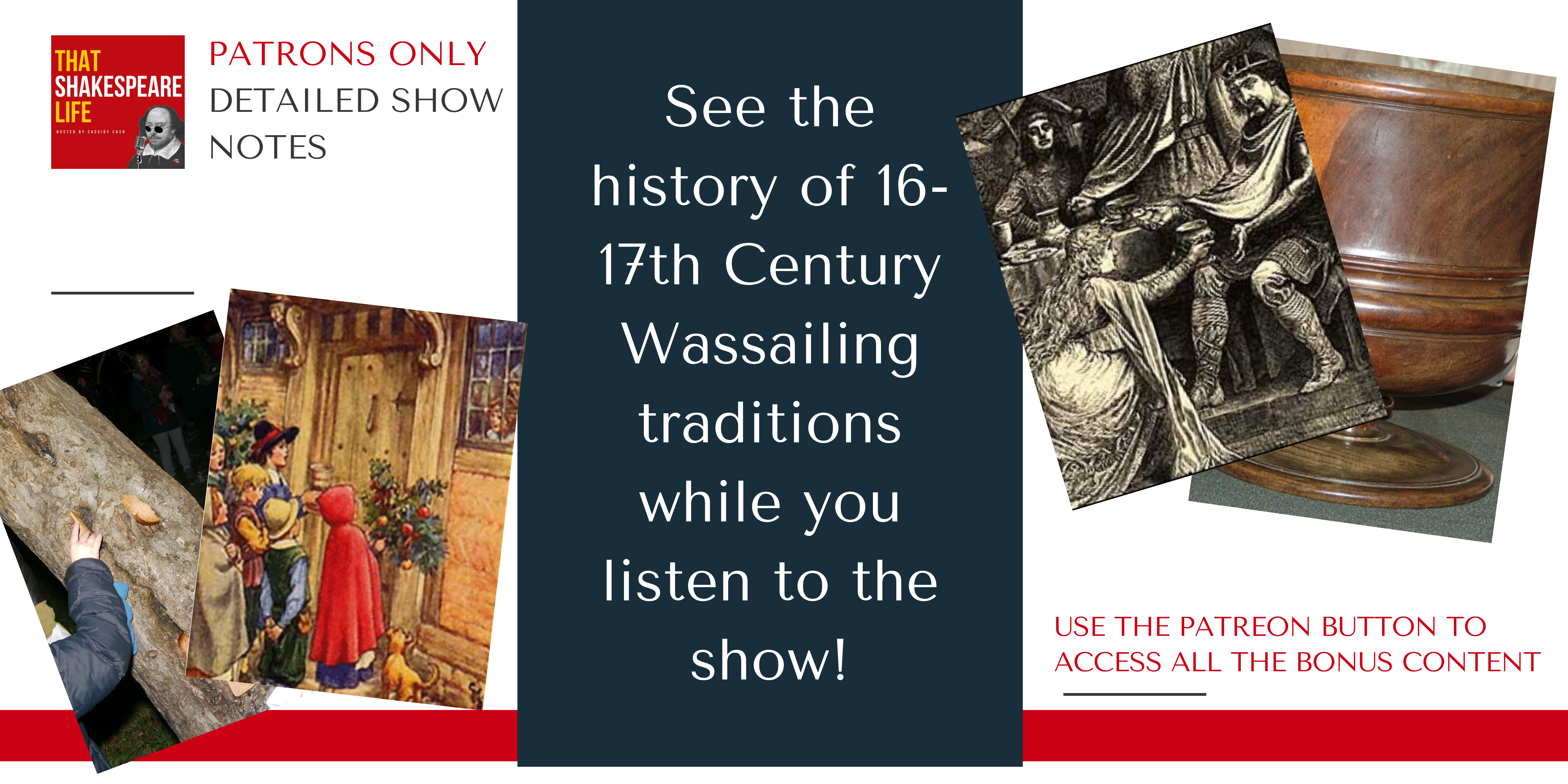
Right click to Open this link in a New Tab and you can explore the extras while you listen.
Comment and Share
That Shakespeare Life is always excited to connect with fellow Shakespeareans who love learning something new about the bard. Subscribe to our show on your favorite listening platform, and please consider leaving us a rating and a review to help our show reach new listeners!
That’s it for this week! Thank you for listening! I’m Cassidy Cash and I hope you learn something new about the bard.
I’ll see you next time!