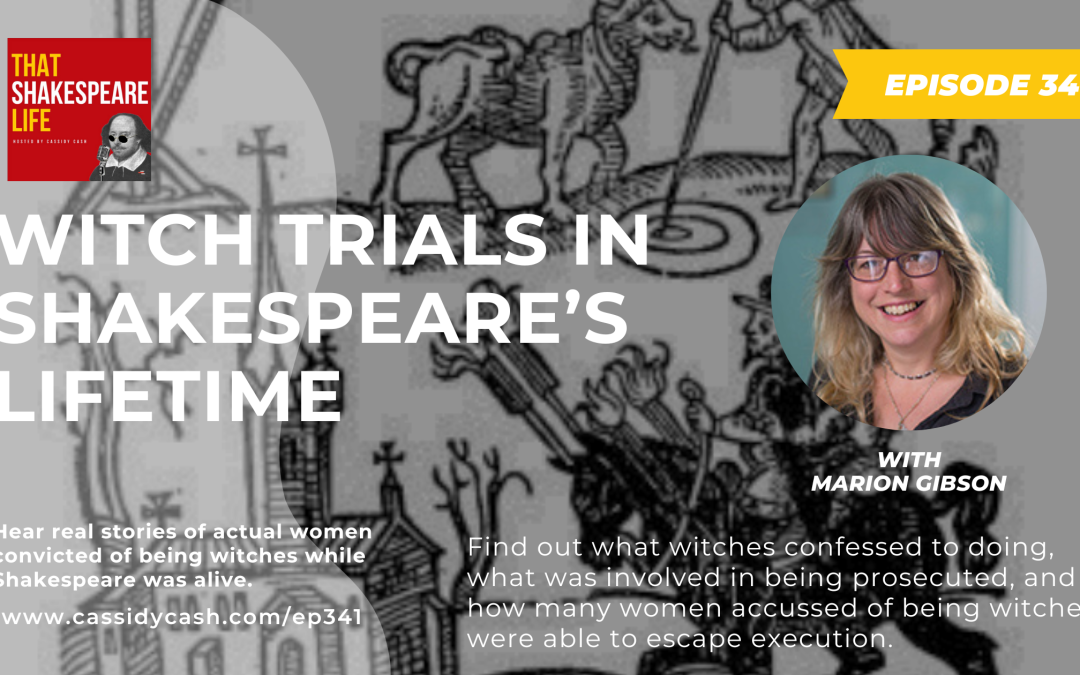
Shakespeare made the three witch sisters famous in his play, Macbeth, by showcasing their manipulative power, incantations, and their famous pot of double double toil and trouble. While this version of witches makes for a fun spoof at Halloween parties today, when Shakespeare was originally bringing these sisters to life on stage, witches were not only considered real beings, but were thought to be clandestine actors, hiding their real identity behind normal appearances so as to be better position themselves to inflict harm on others. Everything from natural disasters to household accidents could be blamed on this kind of magic, and seemingly innocuous actions like speaking sharp words, having the wrong birthmark, or sometimes just owning the wrong kind of house pet, could all land people, and women in particular, in a fight for their lives at a witch trial where they were often hopelessly charged with proving their innocence against charges of witchcraft. Many of these individuals stories have been lost to history, or relegated to a list of names on an accusation list, but our guest this week seeks to bring the real life stories of actual women who were tried as witches to the fore with her latest book titled Witchcraft: A History in Thirteen Trials that takes a look at 13 specific witch trials from the 16-18th centuries. Here today to help us understand the history of how someone would find themselves accused of witchcraft, what was involved in the process of an official witch trial, and the real events blamed on witchcraft that had a powerful influence on King James I of England, who wrote his publication titled “Daemonology” just a couple of years before Shakespeare wrote Macbeth, is expert in the history of witches, and return guest to our show, Dr. Marion Gibson.
Please subscribe on your favorite listening platform and leave us a rating & review to help others discover our show.
Subscribe
Itunes | Stitcher | TuneIn | GooglePlay
Like our episodes? Join our mailing list
I’ll send you a notification when a new episode is available!

Marion Gibson
Marion Gibson is a specialist in Witchcraft and Magic in Literature. Her research investigates the relationships between writings about magic and the supernatural. She has written numerous books on the topic of Early Modern Witches and Witch Trials, including her latest book “Witchcraft: A History in Thirteen Trials” which is available now wherever books are sold. Find out more about Marion and see a full list of books she’s published at her professor website here.

Books and Resources Marion Gibson Recommends:
Owen Davies blog post on Shakespeare and witches
Instruments of Darkness: Early Modern Witchcraft by Jim Sharpe
Gutenberg ebook of King James’ Daemonologie:
A Few Additional Resources from Cassidy
Online record of witches in the early modern period from Brimstone
Marion is perhaps the world’s foremost expert on the history of witchcraft for the early modern period. I encourage you to check out her official university page or her author page on Amazon, to find many of her books and resources if you are interested in learning more on this topic.
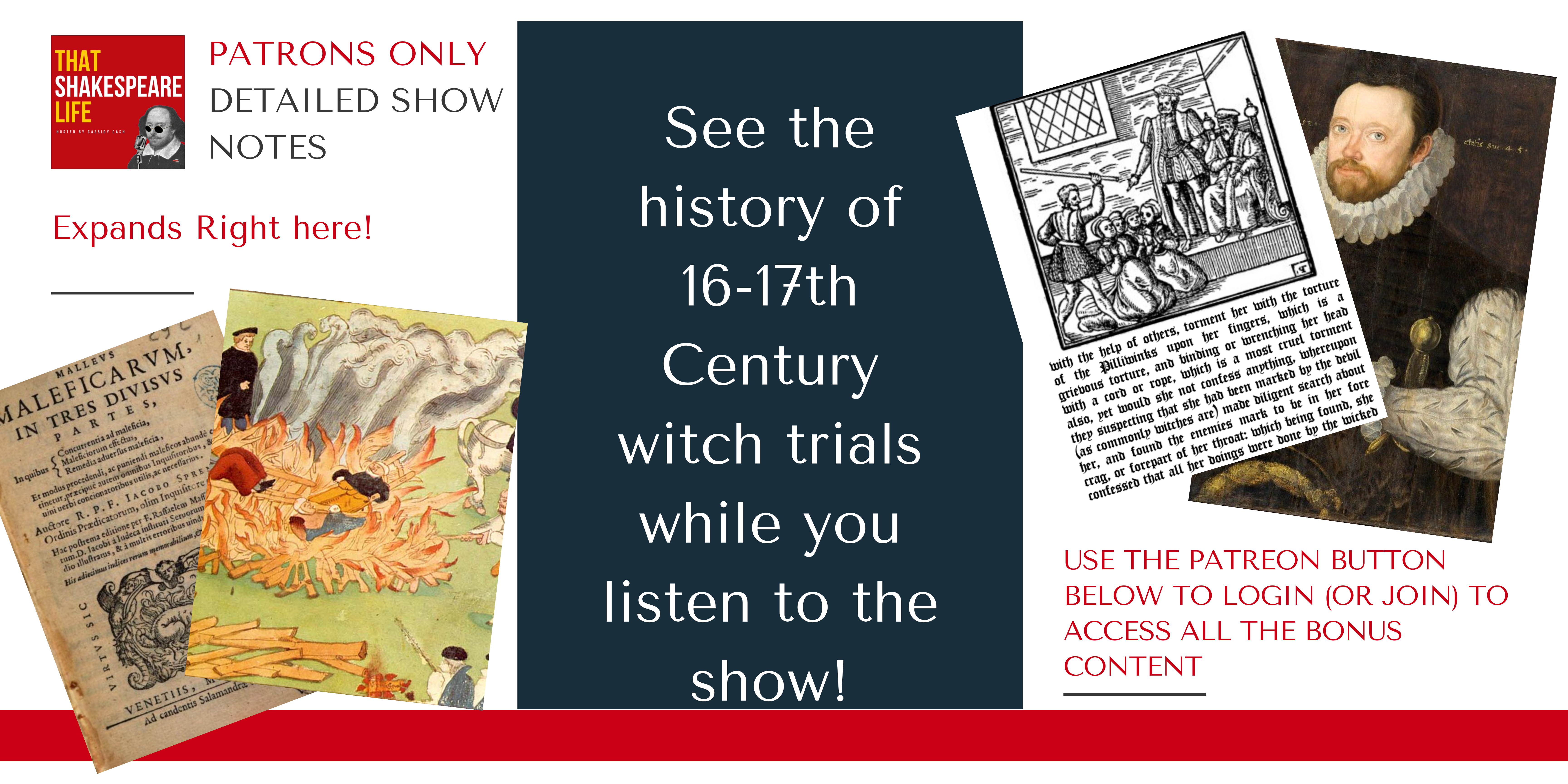
Here’s what’s available for this episode:
- Quotes from Shakespeare’s plays about magic and witches
- 16th Century Record of Agnes Sampson confessing to trying to kill King James
- Present day image of the sea in Scotland Anges Sampson supposedly cursed
- 16th century woodcuts of witches being interrogated by James I/VI
- Copy of the confessions Marion mentions where a woman is accused of setting sail in a sieve
- 17th century painting of someone playing a Jew’s Harp
- Portrait of Reginald Scot, who wrote against the belief in witches
- 17th century records detailing how to test a person for witchcraft
- 16th century illustration of witches being burned at the stake
- 1574 publication Malleus Maleficarum, writing against witches
- List of the names of women who were members of a witch coven in England in 1582
Related Episodes You Might Enjoy:
Comment and Share
That Shakespeare Life is always excited to connect with fellow Shakespeareans who love learning something new about the bard. Subscribe to our show on your favorite listening platform, and please consider leaving us a rating and a review to help our show reach new listeners!
That’s it for this week! Thank you for listening! I’m Cassidy Cash and I hope you learn something new about the bard.
I’ll see you next time!