
Text on this page is a rough transcript from our interview (unless otherwise noted). Details under the images are related to the picture or artifact and are not reflective of any comments by the guest.
Paper Was Made From Linen
In a word—rags. If the paper was meant for objects that were to last, such as writing paper, book paper, paper for illustrations (woodcuts/engravings) those kinds of paper were always made of really good quality rags. How a rag becomes good Quality, is because these rags even after they’ve been used, finely woven linen or hempen coming from hemp—were all converted into paper. For more ephemeral objects, like wrapping paper—poor quality rags were used, possibly also adding ropes or burlap fibers, or other woven or even.
Generally for wrapping meats, wrapping sugar was too early, but there was also sugar paper—which was blue—but it could be used for other sorts of uses. A good quality brown paper, really strong was used for housing construction use—every single available source of fiber was used for paper eventually. Not particularly in England, because paper making in England only started in the late 15th century. Only 100 years before Shakespeare.
Paper Had a Standard Size
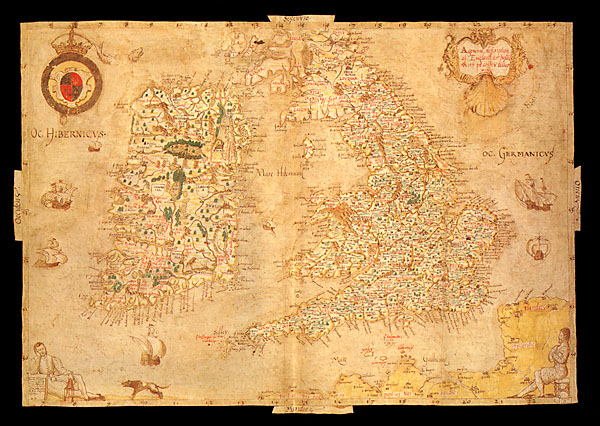
Based on the sizes of books that could be made form animal skin—the leaves of the books were made from animal skin. It is a finite size, so manuscript or people who prepared parchment for manuscripts and layout animal skins to decide how many folios they could get out of that skin because the manuscript edition was so long, (over 1000 years before paper) it was natural for people making paper to adopt the same sizes as parchment. THings haven’t changed very much—if you look at the sizes of paper over a long period of time, they remain within a few inches.
If he was writing scripts for his plays, he would have used a standard writing size, a little different but made for books.
One sheet of paper, folded in half, and either tear it down the fold for two sheets of writing paper or you could cut it. So writing paper was a portion of a standard size or nearly a standard size, and then the full sheet could be folded down to make different sizes.
Manufacturing Paper
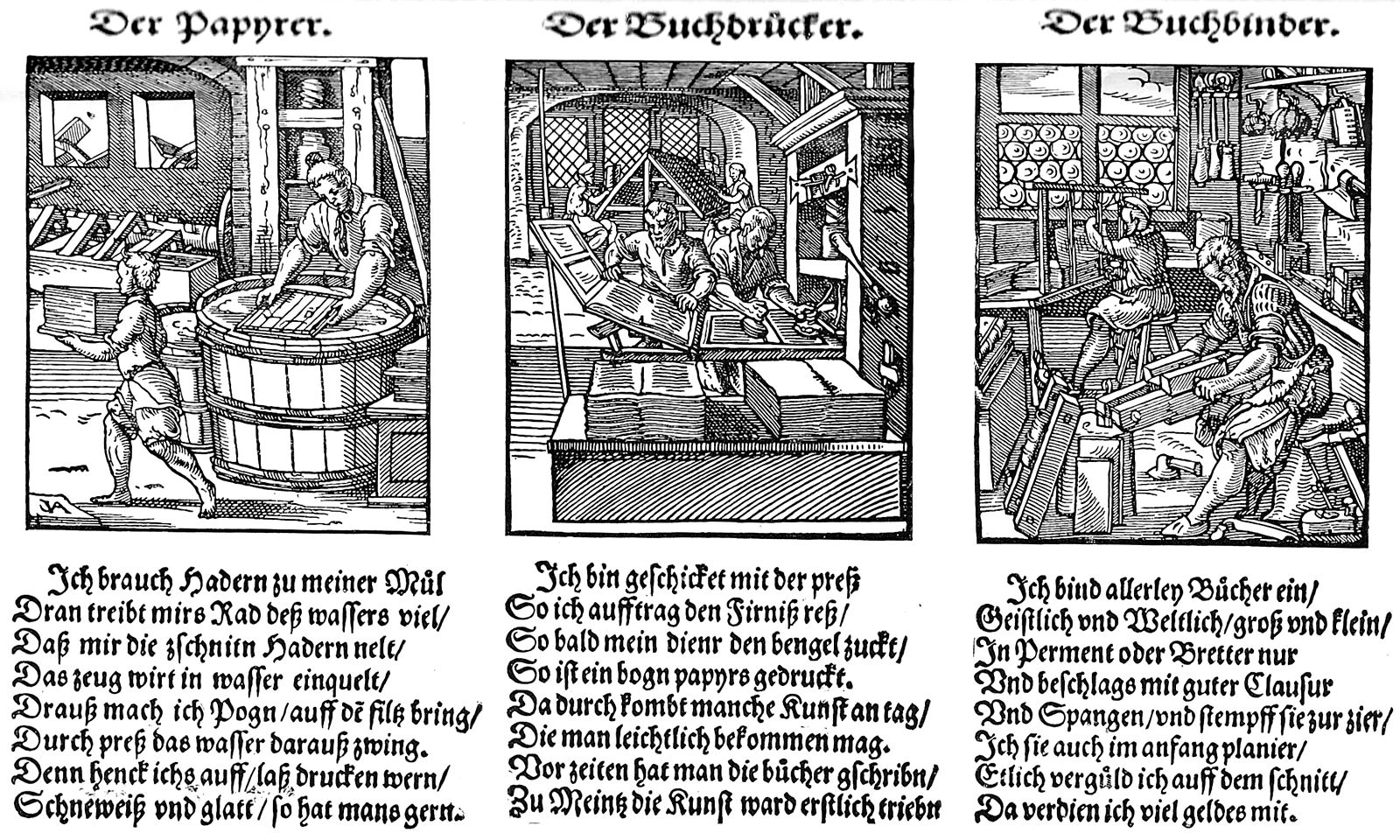
With rags—they were collected and sorted by color, and type of weave, sorted by amount of wear, and damage. They were assigned a grade, representing raw material for different paper of different uses (plate paper, wrapping paper, writing paper, etc). The finest grade of rags were cut into small pieces and set aside in a pile to ferment, in a process called retting —to break down the woven structure of the cloth, softened the material, cleaned the rags of whatever was on it for how it was used—and make that material into a pulp—once the retting was complete, the rags were put into a stamper. This is a mechanized masher, and after a long time of stamping and rinsing with water, the rags were completely broken down into individual fibers. By the time the pulp comes out of the stamper, it is much whiter than it was when it went into the stamper, the problem with the stamper was that it took a great deal of time, sometimes many days, for the retted cloth to reduce to pulp. In the late 1600s, well after Shakespeare’s death a hollander beater was invented in the Netherlands. This machine dramatically reduced the amount of time that was needed to reduce the rags to pulp. That pulp was put into a large vat, with lots of water, and a vat man formed the sheets of paper onto hand mold that is put into sheets.

Buying Paper
You have to have access to a large space and specific building construction. Water wheel has to generate power, tons of water involved, specialized equipment like stampers, you have to have vats, very large presses, and a loft to dry the paper. It was not practical at all for an individual to make their own paper. He would have bought his paper from a stationer, and that paper could have been made in England, but good quality paper was not available in England, so for good paper it is more likely he imported paper from France or Holland.
Compare 16th Century Paper to Modern Printer Paper
The biggest different between 16th C and 21st is the source of fiber. The fiber source for good quality paper was rags, but modern day paper, all of those fibers is trees, so we have two very different sources of fiber. Linen comes from the flax plant, and our modern paper comes from trees. Except for the difference in processing, from the beater or stamping stage on, all papers share common techniques for the formation of sheets. In the 16th century this was all done by hand, and it started to be done by machines in the 19th century.
Paper Vs Vellum Vs Parchment
Paper is always made from a vegetable fiber. Parchment and Vellum is always protein fibers, or animal skins. The vegetable fibers for rag paper, is flax or hemp and parchment from wool or silk, both of which are proteinaceous cannot be made into paper, nor can synthetic fibers like polyester, they can’t bond with each other like vegetable fibers can to make a cohesive durable sheet. Parchment is completely different because it’s made from goat and sheep most commonly. Parchment can be made from any kind of animal, including deer. Parchment refers to a process rather than the raw material. As long as you have an animal skin, you can convert it into parchment on any kind of animal to hand. Most of us when we think of using an animal skin, we think of using a tanned skin, or leather (rather than parchment) and that’s a shade of brown, soft, supple and pliable, relatively thick and durable. Parchment is a process that yields s skin that’s white, or slightly yellow. It’s thinner and stiffer than tanned leather—it is used as a writing or printing surface. Vellum is a kind of parchment—it is very fine, thin, sheet of parchment, and usefully this fine ness is due to the young age of the animal.
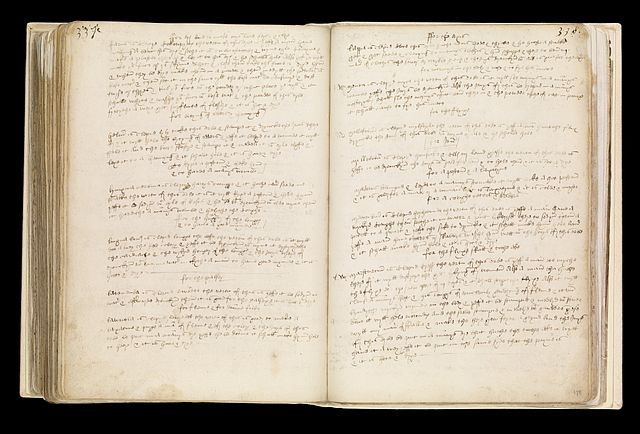
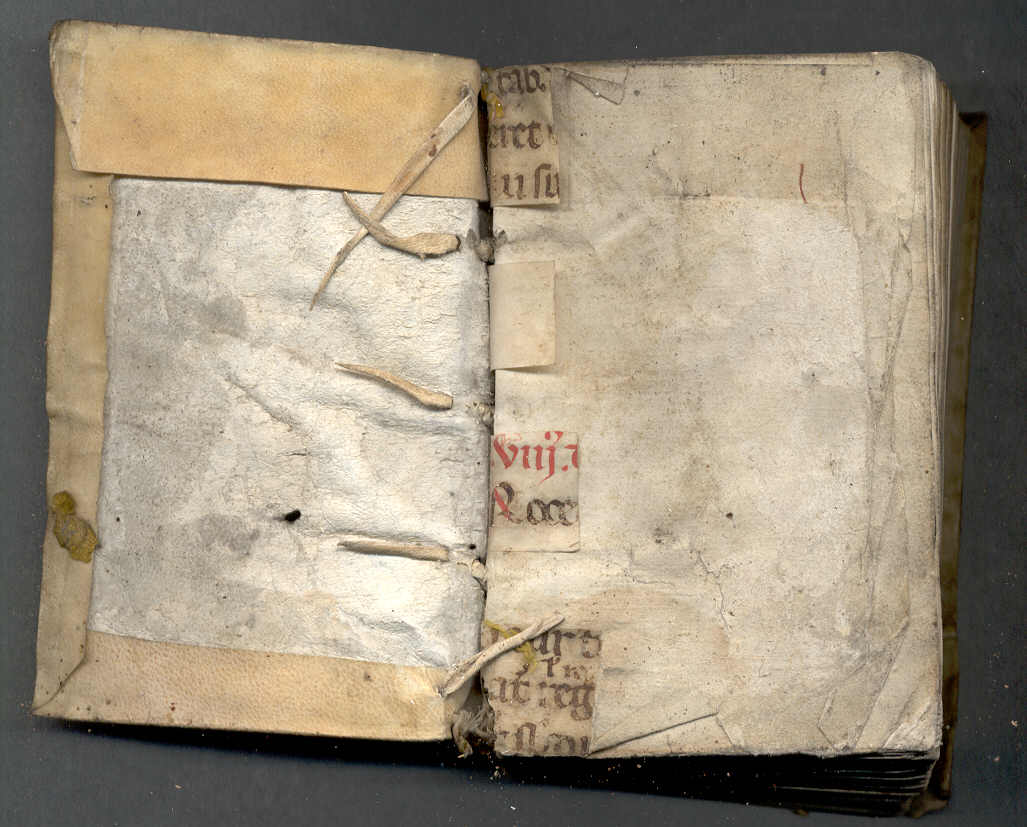
NOTE: Inserted is an envelope containing holograph notes on the anatomical part of this MS. by Joseph Frank Payne [1840-1910] (13 ll.). This MS. was the subject of an article by him in the British Medical Journal 1896, i, pp. 200-203 entitled ‘On an unpublished anatomical treatise of the fourteenth century, and its relation to the ‘Anatomy’ of Thomas Vicary’. Payne has also written a note on fol. 9v of the MS., with his signature, and address. This inscripton is found under the signature of H.W. Bailey of Thetford-a former owner (c. 1875). Book-plate of J. F. Payne. Anglo Saxon letter forms in Moorat’s catalogue description (such as contraction marks and Thorn and yogh symbols) have been replaced with Latin characters.SUMMARY: Chirurgia, preceded by a work on Anatomy based on Mondeville and Lanfranc of Milan: in an incomplete and abridged English translation, originally written in 1392, by an unknown surgeon who seems to have practised in London. With medical notes and miscellaneous receipts by several late 15th cent. and early 16th cent. hands, also in English.Written in a large clear gothic hand in double column of 34 lines to a column. Large ornamental initials in red and black on ff. 10v, 16v, 47v, 56v, 124v, 146, other capitals, paragraph marks and underlinings in red. The 16th cent. pagination is confused, and the MS. has been refoliated in pencil at the lower outer margin.Fol. 10, col. 1 THe holi trinite that is heed and / welle of kunnynge. gheuere and / grauntere of grace to alle … / … / (line 11) … The / which compilacioun of sirurgie I ha / ue compilid and drawen after the discrete / auctorite of my moost worschipful / maistris and predessessouris of the sa / me science. And specialy aftir the no / ble counseil of my worpi maistir / lamfranke … / … / … In the gheer of oure / lord. m. CCClxxxxii …col. 2, line 32 HEre bigynnep the firste partie of / this compilacioun where I haue / ordeyned the anothomy of a man … 55v, col. 2 … by the / whiche that he mai defenden his surgerie. / And thus endith this chapitre afornseid etc.
56, col. 1 Now bigynneth this secunde partie / of this compilacioun … / … / (line 4) … Where I / haue ordeyned the qualitees and the / diffinicioun of a surgian, With woun / dis and empostymes. dislocaciouns / and fracturis of bonys … 124v, col. 1, line 5 Here endith the first distinccioun / of the firste partie. and thou schalt / haue here next folowinge the / secunde distinccioun of the secun / de partie.
128 (Chapter on head wounds: the rest of this ‘distinccioun’ is omitted) … whanne the pye / ment is clarified /
146, col. 1 IN the name of the tri / nite thre personys and oo[n] / god fadir and sone and ho / ly goost. I thinke with / the grace of god to dra / we out the general rulis / or surgerie that bee moost / nedeful to a surgian … / … / (line 11) … And this tretis is dra / wen out of latyne in to ynglisch / aftir a complicacioun of a worschip / ful doctour henricus de amandavil / la that was the kyngis chef maister / surgian of ffraunce … 170v, col. 2 … But if ther be a woun / de in siche drie bodies and mem / bris that gheuen superflue / Here ends the main work.It seems probable that this MS. is a copy from an incomplete or partly illegible original: there are several gaps in the text, and the last part ends in the middle of a sentence.There are copious medical receipts and notes in the various blank spaces, and intervening leaves in the main text, by different late 15th cent. and 16th cent. hands.Fol. 108, col. 2, 108v ‘fflower unguentum’: in English. 128v-130v Rough drawings in ink of urine flasks, with notes in English by a middle 16th cent. hand. 131-137 Alchemical, chemical and pharmaceutical notes in English by the same, or a similar hand.137v-138v Numeration from 1-1000 in English and Latin, and medical receipts in English. 39 Medical receipts by various 16th cent. hands. 139v-143 Blank. 143v-145v Notes on the Humours, Medical astrology, weights and measures, receipts, etc. by the earlier hand of Fol. 137v. Ff. 171v-196 Medical receipts in English, contributed by several hands, including those of the writers of previous entries. [See below]. 196v-200 Blank. There are various names (of owners?) some of whom have made marginal notes, etc. Fol. 50v ‘Mr. Owen [Middle 16th cent.]. 51 ‘Mr. Howlet [Middle 16th cent.]. 81v Husband, Westmy[n]ster, Jones, Holenshed [Early 16th cent.]. 190v Contains a receipt signed by John ? Bryggs dated ‘XXII daye of Jull’ [on the 6th line, ‘the iii yere’] for part payment of an account for xxvis. viiid. for ‘howseh[o]ld stoffe’ consisting of various pewter vessels, etc. by John Master. This is struck through, and below is a revised receipt, also signed by John ? Bryggs, apparently for the whole amount due; and the witnesses are named as John Master, Christofer Briscoe [?] Nicholas Lynch and William Gesty. The date is presumably 1511, the third year of the reign of Henry VIII. This inscription is badly multilated owing to the fact that ff. 190 and 191 had been pasted together, and inexpertly separated. 192 This leaf is badly defaced, and contains inscriptions and scribblings. Among those that can be decyphered are: ‘Iste liber constat bere yt well in mynde / John marster [sic] bothe gentill and kynde / A vinculo doloris Jesu hym bring in vita[m] / iternam [sic] at his last endyng. / Per me John Cure’. This is repeated in a different and larger script, ending ‘Be me John cure’ but is partly defaced. Below at the side: ‘This byll made the eight / day off May in the XXti / yere off owre’ [1529]. The rest has not been written, but below this again: ‘This byll made the eight day / off May in the XVII yere of / owre souerayne lorde Kynge / Henry the eight [1526] witnesyth / Item [?] that Wylliam Smythe off [sic] / Thys[?]byll made the eight day / of Juli [?] yn the tenth day off’ / [The rest has not been written]. The name ‘John Blakhede’ is found among the scribblings. 193 Signature of Edward Clarke (late 16th cent.). 201 This is an original vellum fly-leaf. On the recto is a receipt for ‘A purgation’ in a late 15th cent. hand-found also among the interpolated receipts mentioned above. On the verso of this leaf is a three line inscription ‘Argent, plumby, albut, clepengye [?] of cockesall [Coggeshall, Essex], h, b, / Wyllyam Woodward surgeon of Kelden [Kelvedon, Essex] / Upchere one, botethe [?] of tolson ii, harry baker iii, / morgan iiii, beyond Colchester v myle fyve’. Archives & Manuscripts | This file comes from Wellcome Images, a website operated by Wellcome Trust, a global charitable foundation based in the United Kingdom. Refer to Wellcome blog post (archive). | This file is licensed under the Creative Commons Attribution 4.0 International license. | Source
Script Paper
Canvas is a woven material—it is very heavy duty thread that is woven into a cloth but this cloth is really relatively thick and quite stout, and it is primed by coating the surface (one side after it’s stretched over a wooden frame). You prime the canvas before you can paint on it. You ply the paint on a smooth white surface, it’s a material is called Gesso (calcium sulfate and binder, usually glue—coated in several coats to completely remove any evidence that the canvas is still there). This is completely inappropriate for writing a script or printing because it is way too thick and extremely expensive (takes so long compared to paper).
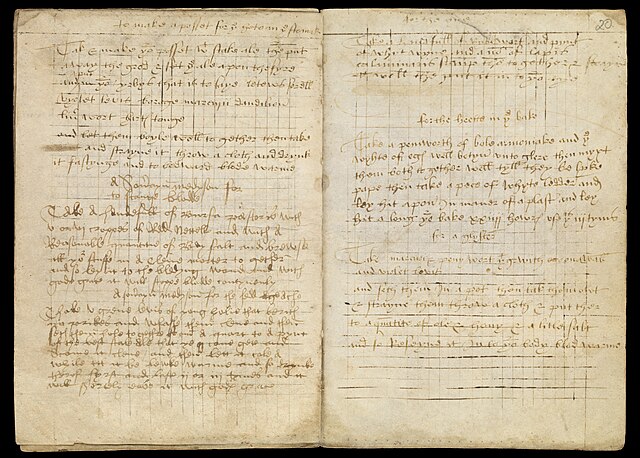
Tables and treatises on the computation of the calendar, astronomy and astrology, in a single hand, with medical recipes added in a variety of later hands. Reference MS8515
This is the substantial remains of a practical manual of late medieval computational science and astrological medicine, that was compiled with some care in the early 15th century. A date of about 1425 seems justified as this is the first date given in both the calendar and tables of eclipses. The script indicates that this manuscript was produced in southern England, probably in London.
The calendar is a version of John Somer’s Kalendarium, originally calculated from 1403-1507, including tables of algorithms for the conversion of Roman and Arabic numerals and an introduction explaining how to calculate the moveable feasts of the Church. The second page for June onwards is lacking, but information for January-May is complete. References to three abbots of Cluny within the calendar (Odilo – 1 January, Hugh – 29 April and Majolus – 11 May, the latter in red script) indicate that the manuscript was probably connected to one of the Cluniac monasteries in England.
This is followed by a method of calculating the movable feasts using the fingers, with prose commentary, often attributed to John of Garland (c.1195-c.1258), ff.9-14v. The first leaf is missing, but almost certainly contained the standard opening found in other surviving copies, as described in L. Thorndike and P. Kibre, A Catalogue of Incipits of Mediaeval Scientific Writings in Latin, 1963, col. 243.
Folios 14v-16 contain details of the characteristics of people born under the ascendancy of the sun, moon and each of the planets that were known at that time (Mars, Mercury, Jupiter, Venus and Saturn). This is followed by a treatise on administering medicine according to the zodiacal sign of a person, ff.16-17, which considers the effect of the stars on the four humours of the body, and cites Galen and Isaac Judaeus. The space for a title has been left blank, indicating that the compiler of this work was not sure of the conventional title. The next few pages (ff.17 and 18v) contain tables and commentary on eclipses of the sun and moon, covering the years 1425-1443 and 1444-1462. The manuscript continued to be used by following generations, with ff.18r, 19 and 20 containing recipes added in the 15th and 17th century. These are written in English, unlike the rest of the manuscript, and include the following: f.18r – medicine for the ague f.19v – symptoms evident in the urine, remedies against plague f.19r – to make a posset for ‘hete in the stomack’, to staunch blood f.20r – for ‘heete in the bak’, for a glyster f.20v – for deafness, to make the hands white The manuscript concludes with a list of terms for drunkenness. In Latin, with some English. PHYSICAL DESCRIPTION: 20 leaves 1 volume: 185 x 130 mm. The volume comprises 3 unbound, or disbound, gatherings of 8, 8 and 4 leaves respectively; the original second gathering of eight leaves is lost Archives & Manuscripts Keywords: Almanack; Recipes; Church
Creative Commons Attribution 4.0 | Source
Preservation Techniques For Paper
People think of paper as being very vulnerable, but it is an incredibly durable permanent material given it’s thickness. You have to do a lot to paper to get it to disintegrate entirely, and that might not be possible unless you burn it. As an example—paper survived the Titanic. You can expect a lot out of paper, but of course we want to preserve them. The preservation requirements for anything made out of paper is to keep it dry. Avoid water staining, and mold growing on the paper. Books are well protected by their bindings. The binding can suffer from a water vent, but the paper will survive inside. Loose sheets of paper like letters or drawings rarely have the protection of a binding so those materials are kept in boxes or drawers and stored off the floor on shelfs. Other problems include exposure to any light—thought the paper in Shakespeare’s paper was much less effected by light, compared to modern newspaper which fades and gets brittle after exposure to light.
Manufactured paper rivals handmade paper. High temps and humidity are problematic, which will speed up adverse chemical reactions. So if you take these fairly simple precautions, you can expect materials made on paper to last a long time. When paper was first introduced into the West, it was seen as a very non permanent material, they preferred parchment because it thought tone more durable, but in fact, paper was much more durable. Generally parchment was phased out once they realized this difference.


.jpg)

.jpg)
_Wellcome_L0074114.jpg)
